Women Veterans Park - History of the POW/MIA Flag
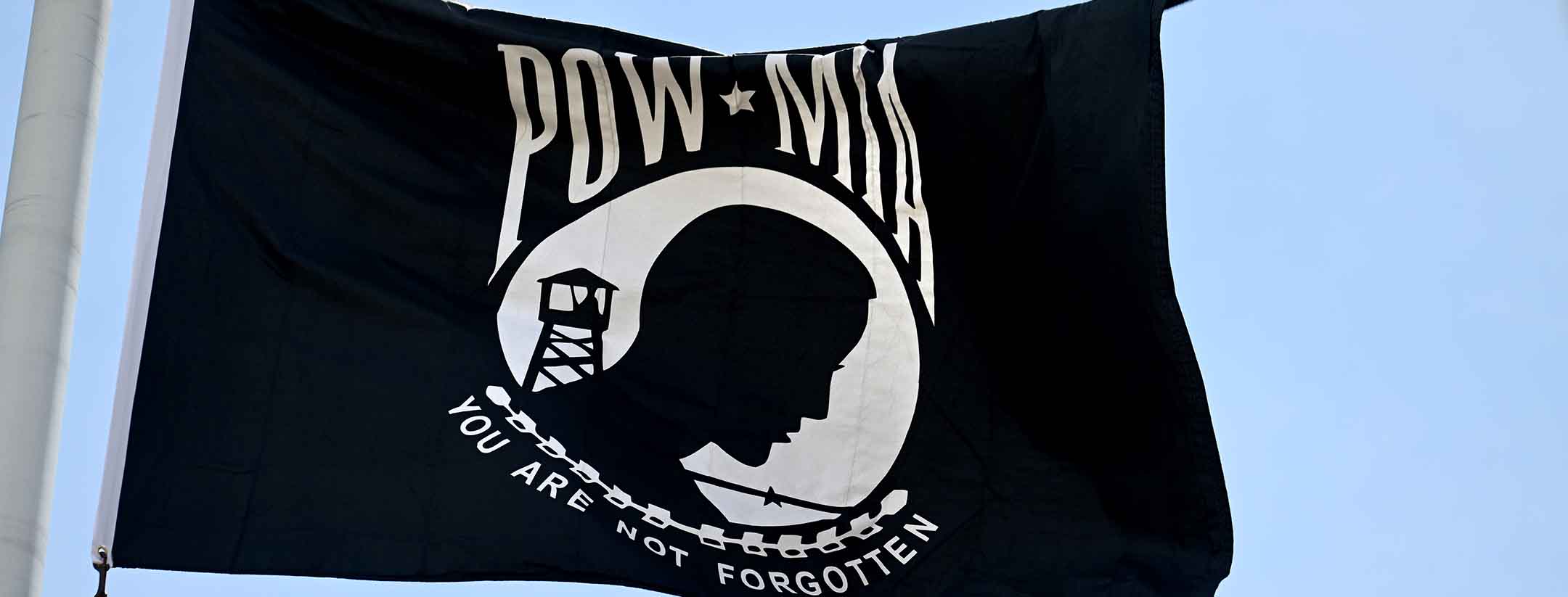
The History of the POW/MIA Flag
Prisoner of War/Missing in Action
The history of the POW/MIA flag was born out of one family’s tragic loss.
In 1970, Mary Helen Hoff’s husband, Navy pilot Lt. Commander Michael Hoff, was declared Missing in Action while flying in Southeast Asia during the Vietnam Conflict. Mary was a member of the National League of POW/MIA Families and she recognized the need for a symbol for POW/MIAs after reading an article in the Jacksonville, Florida, Times-Union about a company that made a banner for the newest member of the United Nations.
She contacted Norman Rivkees, Vice President of Annin & Company, the company that made the banner. Norman, sympathizing with Mary’s loss, worked with Annin advertising agency employee, Newt Heisley, to design a flag to represent our missing service members.
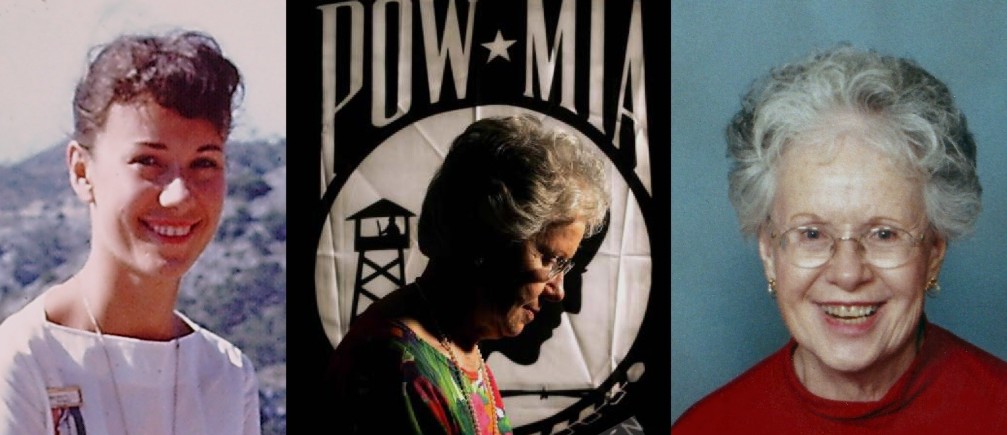
Mary Helen Hoff
(1931-2015)
Following approval by the League’s Board of Directors at a meeting held January 22-23, 1972, POW/MIA flags were manufactured for distribution. Wanting the widest possible dissemination and use of this symbol to advocate for improved treatment for and answers on American POW/MIAs, no trademark or copyright was sought. As a result, widespread use of the League’s POW/MIA flag is not restricted legally. The large volume of commercial production and sales now required to meet demands of federal and state laws does not benefit the League financially, though Annin & Company did contribute a modest amount on one occasion, according to the National POW/MIA Memorial and Museum website.
The POW/MIA flag remains the only flag displayed in the U.S. Capitol Rotunda, where it stands as a powerful symbol of America’s determination to account for U.S. personnel still missing or unaccounted.
Mary Helen Hoff’s efforts remain her legacy as an advocate for the missing to ensure they are never forgotten.
________________________________________________________________________________________________
On March 9, 1989, an official League flag – flown over the White House on National POW/MIA Recognition Day 1988 – was installed in the U.S. Capitol Rotunda as a result of legislation passed overwhelmingly during the 100th Congress. In a demonstration of bipartisan Congressional support, the leadership of both Houses hosted the installation ceremony, at which League Executive Director Ann Mills-Griffiths delivered remarks representing the POW/MIA families.
On August 10, 1990, the 101st Congress passed U.S. Public Law 101-355, which recognized the League’s POW/MIA flag and designated it “the symbol of our Nation’s concern and commitment to resolving as fully as possible the fates of Americans still prisoner, missing and unaccounted for in Southeast Asia, thus ending the uncertainty for their families and the Nation”.